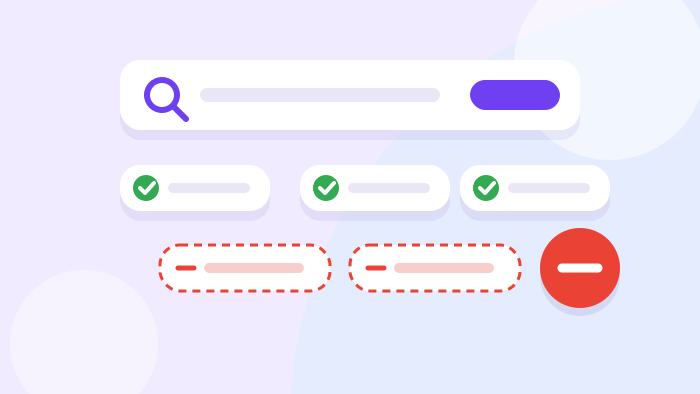
Google Ads Keyword Research
What keyword research includes
Collecting queries
- Keyword Planner
We take queries and the cost-per-click forecast from the Google Ads Keyword Planner. It shows how often a phrase is searched and roughly what a click costs.
- Site and competitors
We look at the services and wording on your site and competitors’ sites. This uncovers queries that do not show up in the general list.
- The customer’s language
We follow how the customer speaks, not what the service is called in the price list. People search for “leaking tap”, not “plumbing works”.
Result: a full picture of demand.
Intent filtering
- Commercial queries
We keep phrases with words like “order”, “price”, “near me”, “urgent” and specific service names. Behind them is a person choosing who to buy from.
- Informational queries
Phrases such as “how to do it yourself” or “what is” go to negative keywords. These people want instructions, not a contractor.
- Match types
For each phrase we choose phrase, exact or broad match. Broad match is only used together with a conversion strategy and lead tracking.
Result: budget only for those who buy.
Grouping by topic
- Groups by service
Each service or product is a separate ad group. The query “pipe replacement” should not lead to an ad about boiler repair.
- An ad per group
For each group we write ads that contain words from the query. People see they have come to the right place and click more often.
- A page per group
Each group leads to a page about the right service, not the home page. This raises both the share of enquiries and the ad’s quality score.
Result: higher quality, lower cost per click.
Commercial and informational queries: the difference
The query text tells you why a person is searching. This decides whether a click brings an enquiry.
| Informational query | Commercial query | |
|---|---|---|
| Example | “how to replace a tap” | “tap replacement price” |
| What the person wants | To figure it out alone | To find a contractor or buy |
| Chance of an enquiry | Low | High |
| What we do | Add it to negative keywords | Use it in the campaign and write an ad for it |
When keyword research is needed
You are launching your first campaign
Without well-thought-out keywords a campaign shows for random phrases, and the first weeks of budget go on learning from mistakes.
Research before launch saves that budget: ads run on commercial queries from the start, and informational phrases are blocked from day one.
What you get before the start
- A list of commercial queries
- A cost-per-click forecast
- A structure of groups by service
- A starter list of negative keywords
Lots of clicks, few enquiries
A common cause is broad queries that show ads to people looking for information. They click, read and leave.
We go through the search terms report and separate phrases with enquiries from empty ones. Working ones stay, the rest go to negative keywords or are removed.
Signs
- A high bounce rate
- Queries with “how to” and “DIY”
- Clicks but no calls
- Broad match without lead tracking
You have added new services
A new service means new queries and new customer wording. If you just add them to a shared group, they mix with the old ones and the ads become vague.
We collect queries for each new service and move them into separate groups with their own ads and pages.
What we do
- Collect queries for the service
- Create a separate group
- Write ads for it
- Link it to the right page
The cost per click is rising
When one group holds different topics, the ad becomes generic, the quality score falls and Google charges more per click.
We rebuild groups by topic and make ads more precise. The quality score rises, and the cost per click drops for the same position.
What we look at
- Keyword quality scores
- How well the ad matches the query
- Landing page relevance
- Groups with mixed topics
The account was run before us
Accounts run for a long time without a system build up duplicates, conflicting phrases and queries without a single enquiry in months.
We check every keyword against the data: what brings enquiries, what wastes budget, what gets in the way of other phrases. What remains is a clean, clear structure.
What we find most often
- Duplicates in different groups
- Phrases without enquiries for months
- Overly broad queries
- No negative keywords
How we research keywords
Six steps: from collecting every wording to a structure where each phrase works towards an enquiry.
Services
We list the services and products to promote.
Collection
We collect queries in Keyword Planner, on your site and from competitors.
Selection
We keep commercial phrases and move informational ones to negatives.
Match types
We choose a match type for each phrase.
Groups
We sort phrases by topic and link them to ads and pages.
Review
After a week we check the search terms report and refine the list.
Who it is for
What you get
You get a list of commercial queries sorted by topic: each group has its own ad and its own page. Informational and random phrases are blocked with negative keywords, and match types are chosen to suit the strategy. Ads are shown to people looking for a contractor, and the cost per click falls thanks to precise ads.
What to know before you start
Let’s find the queries that bring you customers
Keyword research is included in campaign setup and launch, and we prepare negative keywords together with it. The consultation is free: first we look at your services and niche, then we name the price and timeline.
All Google Ads servicesFrequently asked questions about keyword research
- How many keywords does a campaign need?
Quantity is not the point. A few dozen precise commercial phrases sorted by topic are better than thousands of random queries in one group.
- What are match types?
The rule for how closely a person’s query must match your phrase. Phrase and exact match give control; broad match gives reach but needs a conversion strategy and negative keywords.
- Should low-volume queries be used?
Yes, if there is a purchase behind them. Rare but precise queries often bring the cheapest enquiries, because there are fewer competitors for them.
- Can a competitor’s name be used?
Technically yes, but it is often expensive and not always effective. We decide separately for each niche and only if it does not break trademark rules.
- How do keywords differ from negative keywords?
Keywords tell Google when to show your ads, and negative keywords tell it when not to. They only work together.
- How do I know a phrase works?
From lead tracking: we see how many enquiries each phrase brought and at what cost. Without tracking you only see clicks, and the conclusions are inaccurate.
- How often should the list be updated?
Weekly in the first weeks using the search terms report, then once a month. New services are added straight away, in separate groups.